

Exercise Bicycles For Sale
Add a review FollowOverview
-
Founded Date November 19, 1923
-
Sectors TEST
-
Posted Jobs 0
-
Viewed 6
Company Description
What Will Excerise Bike Be Like In 100 Years?
The Ultimate Guide to Exercise Bikes: Pedaling Your Way to Better Health
In the pursuit of health, fitness, and total wellness, home fitness center equipment has actually seen an enormous rise in appeal. Amongst the most trusted, efficient, and available pieces of physical fitness equipment is the humble exercise bike. Whether someone is seeking to drop weight, train for a marathon, or just remain active while working from home, the stationary bicycle home exercise stays a staple of modern fitness.
This thorough guide explores everything one needs to learn about stationary bicycle, from the various types available to the physical benefits they offer and how to pick the right one for specific goals.
Why Choose an Exercise Bike?
For decades, the exercise bike has actually been a health club flooring important, but its transition into living spaces and office has actually made it more popular than ever. Unlike running or high-impact aerobics, biking is a low-impact exercise. This means it positions minimal stress on the hips, knees, and ankles, making it a perfect exercise for people of any ages, fitness levels, and rehabilitation phases.
Beyond being mild on the joints, stationary biking is a powerhouse for cardiovascular health. Routine riding reinforces the heart, decreases high blood pressure, and improves lung capacity. Furthermore, it assists in weight management by torching calories and constructing lower-body muscle strength, specifically targeting the quadriceps, hamstrings, glutes, and calves.
Types of Exercise Bikes
Not all exercise bikes are developed equivalent. Depending upon a user’s comfort choices, space restraints, and physical fitness objectives, makers generally divide stationary bicycle into 3 primary categories: Upright, Recumbent, and Indoor Cycles.
1. Upright Bikes
Upright bikes closely simulate the feel of a conventional outside bicycle. The user sits upright with their torso slightly leaned forward, engaging the core muscles to keep posture.
- Best for: General fitness, casual riders, and those trying to find a flexible, space-saving exercise.
- Pros: Engages core muscles, compact footprint, versatile workout positions.
- Cons: Can cause lower back or neck pressure throughout long sessions for novices.
2. Recumbent Bikes
Recumbent bikes feature a bigger, bucket-style seat equipped with a back-rest, and the pedals are positioned out in front of the user rather than underneath them. This design disperses body weight uniformly and provides outstanding lumbar assistance.
- Best for: Seniors, individuals with lower pain in the back, injury rehab, and those seeking ultimate comfort.
- Pros: Ergonomic back support, zero influence on the spinal column, very simple to mount and dismount.
- Cons: Takes up more floor area, less focus on upper-body and core engagement.
3. Indoor Cycles (Spin Bikes)
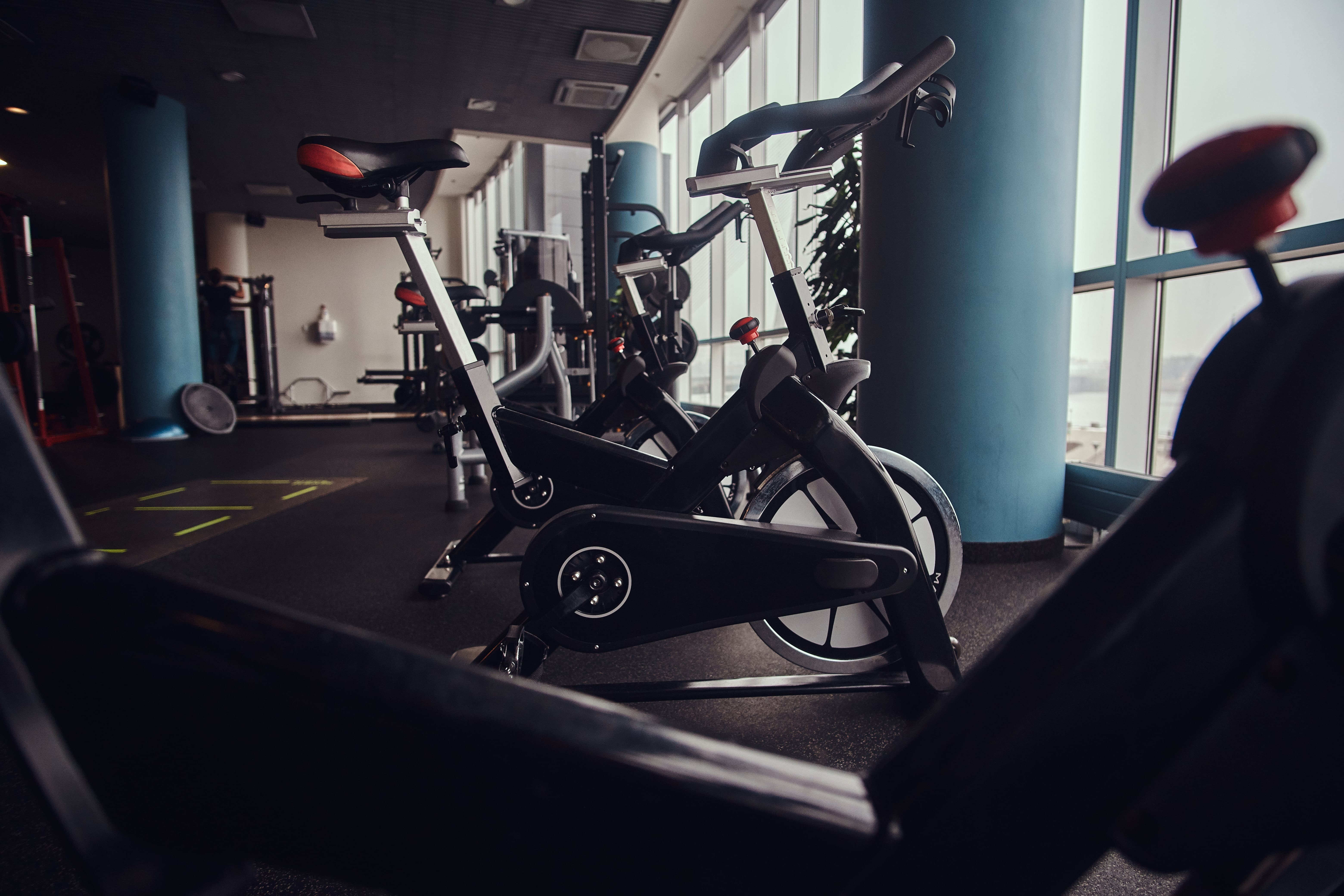
Indoor cycles are designed to duplicate the experience of road biking. They feature heavy weighted flywheels, direct-drive resistance systems, and allow the rider to stand out of the saddle for hill climbs and high-intensity intervals.
- Best for: Advanced bicyclists, high-intensity period training (HIIT), and lovers of studio-style cycling classes.
- Pros: Highly extreme workouts, sensible road-bike geometry, durable building.
- Cons: Harder racing-style saddles can be uneasy initially; usually more pricey.
Contrast of Exercise Bike Types
To help figure out which design fits particular way of life needs, the following table compares the key features of each significant type of stationary bicycle:
| Feature | Upright Bike | Recumbent Bike | Indoor Cycle (Spin Bike) |
|---|---|---|---|
| Body Position | Upright, minor forward lean | Reclined with back assistance | Aggressive forward lean/ standing |
| Joint Impact | Low | Incredibly Low | Low |
| Core Engagement | Moderate | Low | High |
| Area Required | Compact | Moderate to Large | Compact |
| Main Focus | General Cardio & & Toning Comfort, Rehab & Endurance HIIT, Strength & Endurance | Common Resistance Magnetic or Friction | |
| Magnetic Friction or | Heavy Magnetic Key Benefits of | Riding an | Exercise Bike Integrating |
a stationary bike into a weekly regular yields profound physical and psychological health advantages. Here are the most significant benefits: Cardiovascular Endurance: Cycling gets the heart pumping, increasing
- blood flow and helping to decrease the risk of cardiovascular disease and stroke. Weight Loss and Calorie Burning: Depending on strength and body weight, a single 45-minute biking session can burn anywhere from 400 to 600 calories. Lower Body Muscle Toning: The continuous pedaling movement develops muscular endurance and strength in the legs, hips, and glutes. Joint-Friendly Movement: Unlike running on asphalt or pounding away on a treadmill, biking is fluid and soaks up very little shock, making it safe for chronic joint sufferers. Mental Health Boost: Like any aerobic exercise, biking activates the release of endorphins– the body’s natural mood elevators– which help in reducing stress, anxiety, and symptoms of depression.
- What to Look for When Buying an exercise cycle home Bike Purchasing an exercise bike is a financial investment in individual health. To ensure the best device gets home, buyers should assess numerous critical factors: Resistance Mechanisms Resistance is what makes pedaling tough. There are usually two types: Friction Resistance: Uses felt pads that push versus the flywheel. It is typically found on affordable or standard spin bikes. While effective, the pads use out gradually and require occasional replacement. Magnetic Resistance: Uses magnets and a flywheel to develop smooth,
- quiet resistance without physical friction. This type is virtually maintenance-free and uses exceptionally peaceful operation. Adjustability An ill-fitting bike can lead to poor type, muscle stress, and pain. Search for a model with a seat that adjusts both vertically and horizontally, in addition to handlebars that can be customized to fit the rider’s height and arm length. Console and Technology Modern stationary bicycle come with whatever from basic LCD screens showing time, speed,
distance, and calories, to advanced HD touchscreens with built-in streaming apps and live-class subscriptions (such as Peloton or iFit ). Pick a tech plan that matches inspiration levels and spending plan. Weight Capacity and Sturdiness Constantly inspect the manufacturer’s
weight limitation. A heavier bike frame usually relates to better stability during vigorous sprints and heavy resistance climbs up. Tips for Maximizing an Exercise Bike Workout Getting the best home Exercise equipment outcomes from a stationary bicycle requires more than simply hopping on and pedaling aimlessly. Think about the following finest practices: Focus on Proper Form: Keep shoulders unwinded, elbows somewhat bent, and avoid slouching. Guarantee the seat height is right– there ought to be simply a small bend in the knee at the bottom of the pedal stroke. Include Intervals: Alternate in between high-intensity sprints and low-intensity healing periods. Interval training
burns more calories in a much shorter quantity of time and improves cardiovascular fitness faster than steady-state riding. Stay Hydrated: Even inside your home, biking works up a
- heavy sweat. Keep a water bottle within arm’s reach. Blend the Routine: Combine endurance trips, hill climbs up, and cadence drills to prevent exercise uniformity and continuously challenge various muscle groups. The exercise bike stays a classic, extremelyeffective physical fitness tool. Whether the goal is to shed a couple of pounds, protect aging joints, or maintain cardiovascular health from the comfort of home, there is a bike suited for every single body and budget plan. By comprehending the distinctions in between upright, recumbent, and indoor cycle designs, fitness lovers can make an educated option and start a smooth, low-impact journey towards a much healthier way of life.
distance, and calories, to advanced HD touchscreens with built-in streaming apps and live-class subscriptions (such as Peloton or iFit ). Pick a tech plan that matches inspiration levels and spending plan. Weight Capacity and Sturdiness Constantly inspect the manufacturer’s
weight limitation. A heavier bike frame usually relates to better stability during vigorous sprints and heavy resistance climbs up. Tips for Maximizing an Exercise Bike Workout Getting the best home Exercise equipment outcomes from a stationary bicycle requires more than simply hopping on and pedaling aimlessly. Think about the following finest practices: Focus on Proper Form: Keep shoulders unwinded, elbows somewhat bent, and avoid slouching. Guarantee the seat height is right– there ought to be simply a small bend in the knee at the bottom of the pedal stroke. Include Intervals: Alternate in between high-intensity sprints and low-intensity healing periods. Interval training
burns more calories in a much shorter quantity of time and improves cardiovascular fitness faster than steady-state riding. Stay Hydrated: Even inside your home, biking works up a